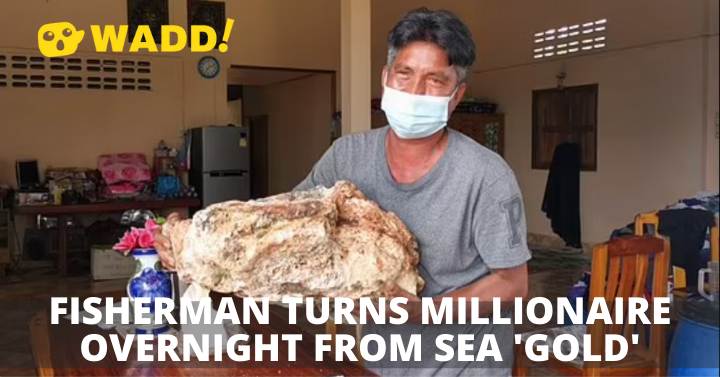
A struggling fisherman found a rare piece of ambergris, whale vomit floating on a Thai beach.
Narong Phetcharaj, 56, returned to shore when he saw a strange object being pushed towards the Niyom beach in Surat Thani.
Phetcharaj quickly examined the strange object and realised it could be the valuable whale vomit, ambergris. He recognised the waxy object similar to the one on the news.
He immediately dragged the mysterious object to his house, where he quickly examined it at his house. Burning pieces of the lump seemed to confirm that the substance was indeed ambergris as it quickly melted.

Phetcharaj, who typically only earns a few thousand Thai baht a month, took the 30-kilogram object to test it at the Prince of Songkla University. The result - it was genuine ambergris!
"None of the villagers has seen or touched a real ambergris before," said Phetcharaj.

Phetcharaj with the certificate, which proves the ambergris is genuine. Image source via dailymail
With a weight of 30 kg, Phetcharaj became a millionaire!
Previous pieces of ambergris have sold between USD37,500 and USD42,791 a kilogram.
Narong Phetcharaj plans to retire from fishing and throw a party for all his friends.
What is Ambergris?
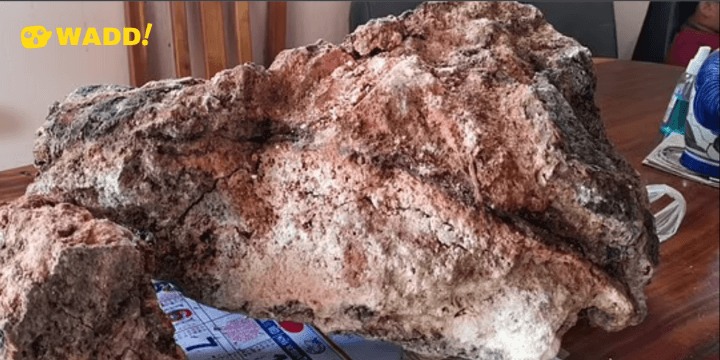
Ambergris, sea 'gold'. Image source via Dailymail
Ambergris or whale vomit is considered a sea 'gold' because the odourless alcohol extracted makes perfume's scent last longer.
Ambergris is produced by sperm whales when the bile ducts in the gastrointestinal tract make secretions to ease the passage of large or sharp objects.
The whale vomits the mucilage, which solidifies and floats on the surface of the ocean.
Ambergris takes years to form, hence its rarity and its value.
This foul-smelling ambergris develops a sweet and lasting fragrance after it dries out, making it one of the most sought-after ingredients in the perfume industry.
Early this year, thirty-five fishermen in Yemen found USD 1.5 million worth of ambergris in the carcase of a sperm whale.

Two other lucky Thai fishermen also found two lumps of ambergris approximately valued at USD300 thousand earlier in March this year.

So, if you happen to walk by the beach, at least you know how sea 'gold' looks like!