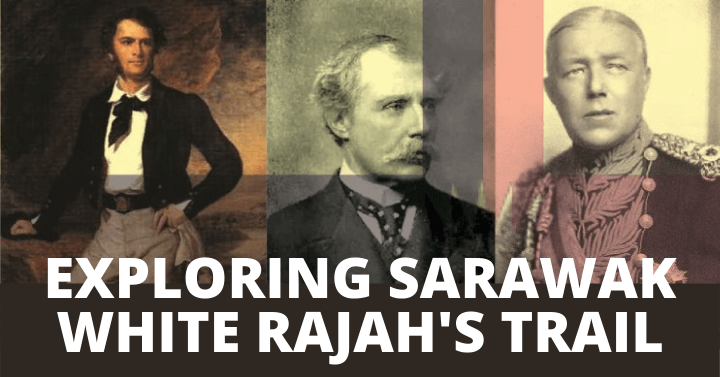
Kuching is a perfect city to enjoy on foot! Walk down the same streets and alleys that the three White Rajah (King) used to walk during their 100-year reign and discover their footprint in Sarawak.
CHINESE HISTORY MUSEUM
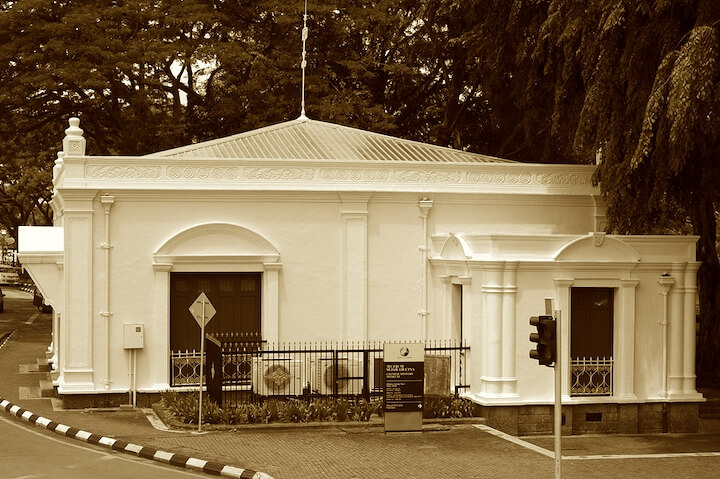
Chinese History Museum Sarawak Image source via sarawaktourism.com
Originally a Chinese court, the building was declared open in 1912 by the Rajah and was used by the Chinese community as a court to administer the laws and customs on marriage, divorce and probate, and took care of all civil cases involving Chinese litigants before it was dissolved in 1921. It was then used as an office by the Chinese Chamber of Commerce (formed in 1930) until 1990. Three years later, the building was missioned by the Sarawak Museum as a Chinese History Museum that operates till this day.
STEAMSHIP BUILDING
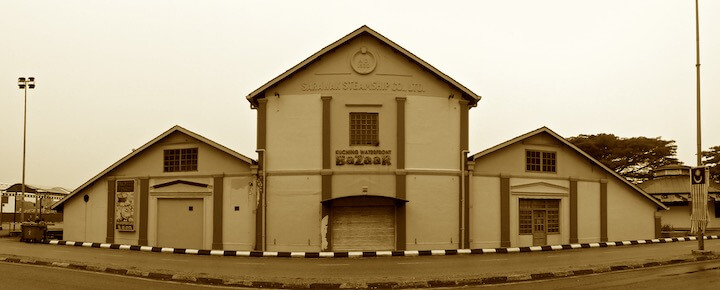
Steamship Building Sarawak Image source via Wikicommons
The Sarawak Steamship Company building belonged to the steamship company, which was established in 1875. Steamship is introduced to replace sailing ships enabled shipping to be carried out throughout the year without depending on the winds. The building, however, dates from the 1930s, during the reign of Charles Vyner Brooke, the third and last White Rajah of Sarawak. The building was used by the Sarawak Steamship company as a warehouse and as an office. After it was extensively renovated, it is now the home of the Kuching Waterfront Bazaar, with dozens of stalls selling a wide range of handicrafts and souvenirs.
THE SQUARE TOWER
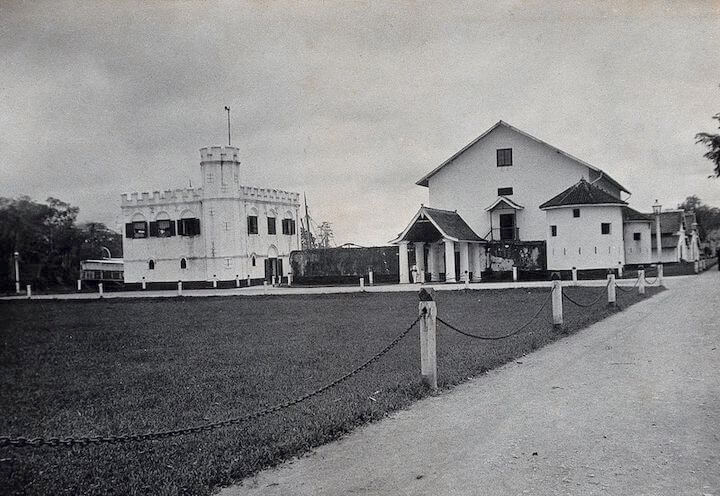
Square Tower next to the prison Image source via commons.wikimedia.org
The tower has been standing since its completion in 1879. The Square Tower served as sentry posts on each side of the Sarawak River along with Fort Margherita. With the first Kuching Prison next to the tower, it served as a maximum-security detention centre before it was later converted to a dancing hall for Brooke’s officers and servants during weekends.
THE GENERAL POST OFFICE

General Post Office Image source via sarawaktourism.com
Built in 1931, it appears to belong to the early 19th century with its neo-classical style with Corinthian columns. Completed in 1932 under Charles Vyner (the third Rajah), the facades were quite in contrast to the style of buildings favoured by James and Charles Brooke (the first and second Rajah). It was designed by Denis Santry of Messr. Swan & McClaren Architects (Singapore), this building was completed in 1932 and was once used as a police station and also as the Rajah’s Stables.
PAVILLION
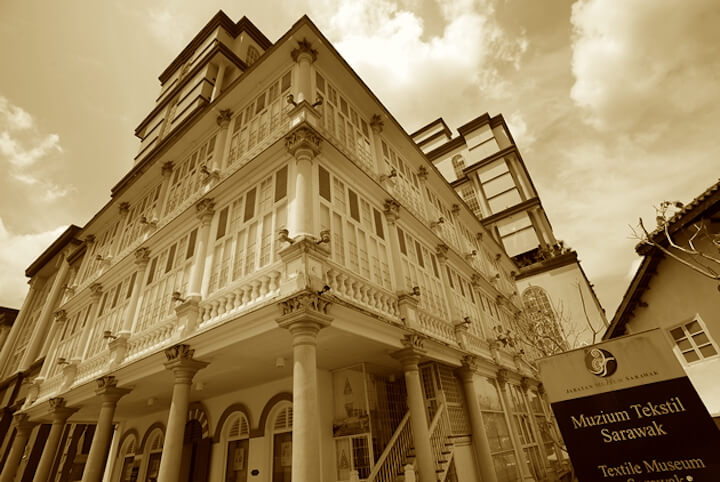
Sarawak Pavillion, now Textile Museuem Image source via sarawaktourism.com
The Sarawak Pavillion was originally used as the Medical Headquarters, the three-storeys high building housed consulting rooms, a laboratory and offices on the ground floor, while a ‘European Hospital’ and nurses’ quarters occupied the first and second floor respectively. After World War II, the Japanese used it as a propaganda headquarters. It was occupied by the Education Department until 1970. Then it was used by the Judiciary Department. It has since been conserved and is currently the Sarawak Textile Museum.
ROUND TOWER
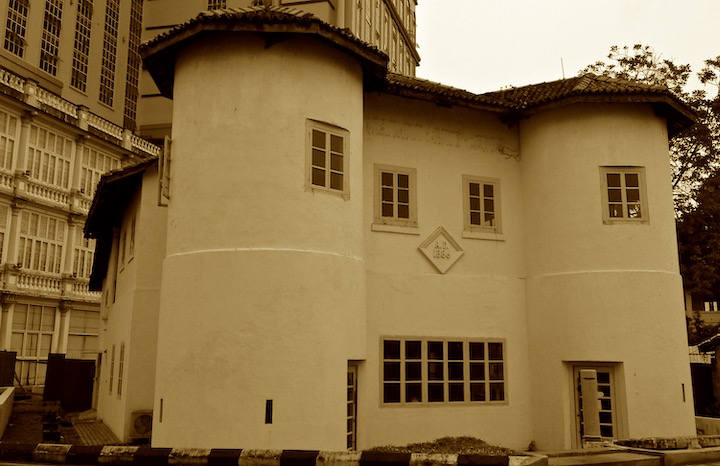
Round Tower Image source via commons.wikimedia.org
Completed in 1886, the Round Tower was the town dispensary when the Pavilion was the Medical Headquarters. Nonetheless, due to its strategic location, it was believed that the building was intended as a sentry post and possibly also as a defensive outpost for the Brooke administrators. It replaced the former dispensary and hospital operated at Mission House by Bishop Frank McDougall (a qualified surgeon). It remained a dispensary until 1947 and was later used by the Labour Office and the Subordinate Courts Registry. It is nowadays, the headquarters of the Sarawak Craft Council.
OLD KUCHING COURTHOUSE
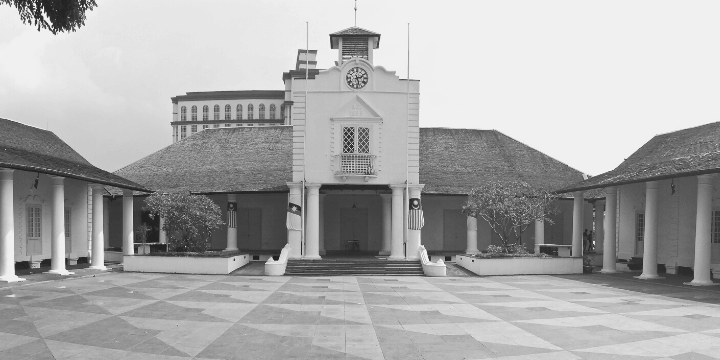
Old Kuching Courthouse
Began in 1868 as the first Brooke era administrative building, it housed all government functions under one roof. It is now known as the Sarawak Tourism Complex after conservation works for the Old Kuching Courthouse for Adaptive Re-use was completed in 2003, winning several national awards for conservation since its completion.
CHARLES BROOKE MEMORIAL
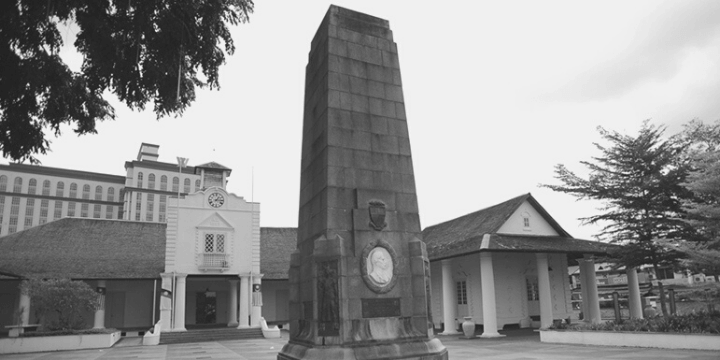
Charles Brooke Memorial
The memorial were designed by Architect Messr. Swan & McClaren (Singapore) to honour the second Rajah, Charles Brooke for his services and dedication to the State, the 6-meter high granite obelisk (commissioned in 1924) contains a bronze panel at each corner with figures representing the ethnic diversities found in the State.
ASTANA
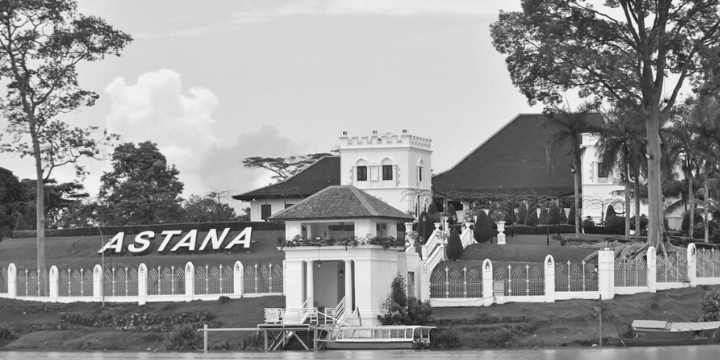
Astana, a wedding gift Image source via theculturetrip.com
The Astana was built as a bridal gift to Rajah Charles Brooke’s beloved wife, Ranee Margaret. Before it was built on this site, the Astana was known as ‘The Grove’. It was James Brooke’s first residence before being replaced by ‘The Government House’ after a fire in 1857. When the Astana was completed in 1870, ‘The Government House’ was demolished. The Brookes continued to stay there until World War II. The Astana is now the official residence of the State Governor.
FORT MARGHERITA ort Margherita

Fort Margherita Image source via jomjalan.com.my
Named after Charles Brooke’s wife, Ranee Margaret, this fort situated across the Sarawak River, was established by the second Rajah as his first line of defence. It was said that Charles Brooke uses psychology to intimidate any incoming attackers. Every day at dawn, there will be a cannon blast sounding end of shift and also 'showing-off; the Brooke's equipability. It was later besieged by the Japanese who marched into Kuching through the Satok Bridge. It was also turned into the Police Museum until 1999.
There’s much to discover about the quaint little town of Kuching. With the help from the experienced guides of Rajah Brooke Trail, visitors of Kuching will gain some unique insights into the history and legacies of Kuching city. Starting at James Brooke Bistro situated at Kuching Waterfront before retiring at Abas Homestay, the only Malay village homestay in Kuching, these are some of the historical buildings that will unravel before your eye.
Sarawak. More To Discover.