
This is dedicated to products #MADEINSARAWAK!
Sarawak is acclaimed and blessed for its rich diversity of cultures from various ethnicities. Hence, we would like to introduce these uniquely Sarawak products, homegrown, and locally-produced right here!
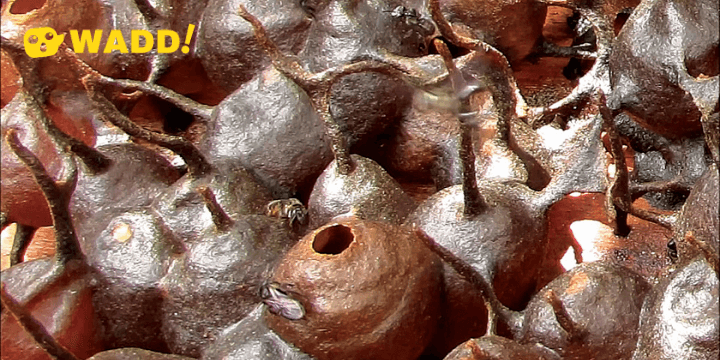
KELULUT HONEY
Stingless bee is widely known as kelulut in Malaysia. Its genetic patterns are distinct from other honey bees. As for Sarawak’s kelulut, there are two unique species, and they are - Tetragonula Melanocephala and Geniotrigona Lacteifasciata. Tetragonula does not sting. They are also known as the “golden” bee due to the golden glow on its body. Kelulut’s honey is collected from its propolis. This type of honey is very high in antioxidants and also provides other antibacterial and antifungal properties. They are often used as a home remedy for certain illness or diseases.
Kelulut honey has a thinner consistency, and it is slightly watery like maple syrup. You will be surprised that it has a hint of sourness in its taste! As many believe that this honey is a health elixir that helps boost energy and strength, more begin to gain interest in the culturing of stingless bees.
Kelulut honey is easily attainable as they are sold in small convenient packs that can be consumed directly, used as a face wash or mask to calm acne, and it has even been said to help slow down ageing too! So be sure to bring home with you this golden gem of Sarawak for your friends and family if you’re visiting!
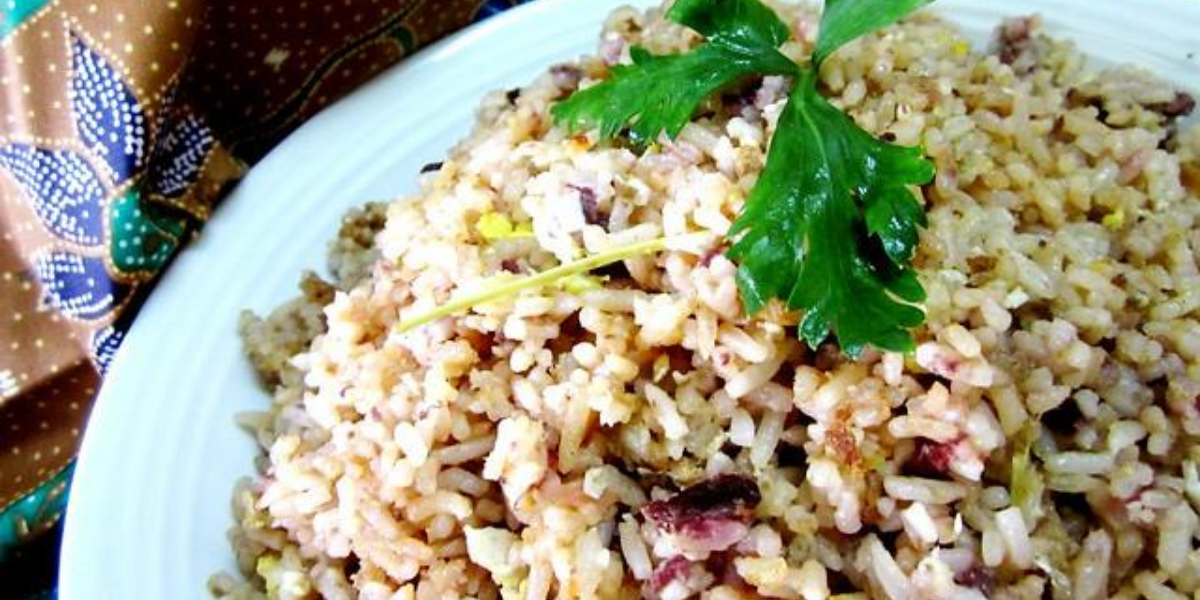
Dabai Fried Rice Image source via suituapui.wordpress.com
DABAI
A rare, exotic fruit that can only be found in Borneo, more abundantly at the riverbank of Rajang River in Sibu. Dabai is a seasonal fruit, and they are a geographical indication (GI) product. It is known as the ‘Black Jewels of Borneo, due to its black, olive-like appearance. Before it turns ripe, it is white; whereas the flesh is yellowish-white.
To cook Dabai, soak them in warm water until it is soft and tender. The texture should be creamy and buttery like that of an avocado. It is customarily eaten with soy sauce, salt or sugar, or just plain. Just like kelulut, Dabai is high on antioxidant as well. It has fibre, minerals, and according to recent research, it has three times more Anthocyanin than a grape!
Dabai is now widely cultivated, and there have been many innovations to market it globally. One item that has been successfully produced by the Sarawak Agriculture Department is dabai-flavoured ice-cream! They are also available as snacks such as dabai keropok (crackers) and nuts. Due to its high antioxidant properties, the rare fruit has also become a marketable commodity for products such as soaps and facial cleansers.
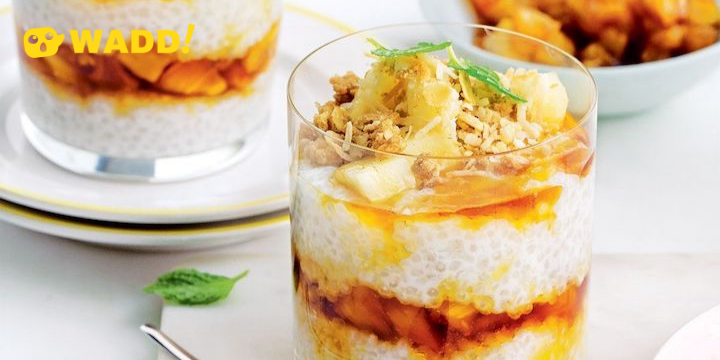
Coconut and ginger sago with caramelised pineapple Image source via delicious.com.au
SAGO
Sarawak is the largest exporter of sago with more than 40,000 tons of dry sago starch exported to nearing states and countries. Sago palm, known as Metroxylon sagu is a perennial crop which requires no replanting. The five significant sago cultivation locations are Oya-Dalat, Mukah, Pusa-Saratok, Igan, and Balmgan, where the Melanau community resides. Since prehistoric time, Melanau farmers have been cultivating sago for use and consumption already. Sago palms thrive best in the lowland forest and freshwater swamps environment.
Sago is consumed in many ways. They are used to make starchy paste linut, as flour to bake biscuits, added into soups and more. The three distinct local delicacies that use sago as ingredients are tebaloi, umai (Sarawak’s version of ceviche), and kuih sago.
Tebaloi is a starchy-sweet traditional snack biscuit that makes an excellent souvenir for one to bring home. Kuih Sago is a dessert made out of sago pearls, sugar, and coconut flakes; both make a perfect pairing for your afternoon tea or coffee. The list of sago products in Sarawak goes on, but these are a few of the must-try to get you started.
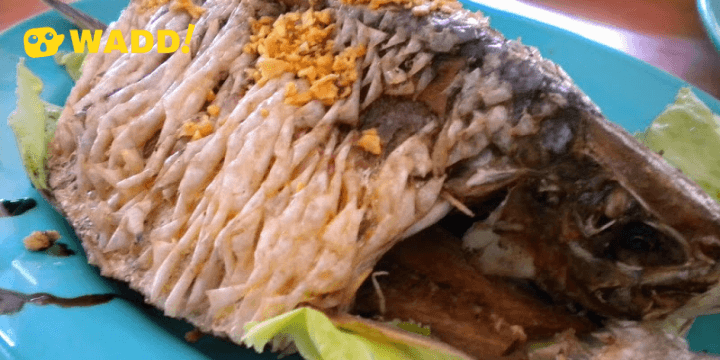
Deep-fried Terubok Ikan Image source via http://food.malaysiamostwanted.com/
IKAN TERUBUK MASIN
Besides the famous pepper, ikan terubuk (Tenualosa Toli Fish) is another excellent gift for those visiting Sarawak to bring home. As one of the most renowned food sources in Sarawak, terubuk fish is found abundantly in most Sarawak rivers, but it is only available between April and August. However, ikan terubuk is slowly depleting as more people become aware of how delectable it is.
The fish is known for its delicate and criss-cross bones, but between those bones hides the sweet, succulent and fatty flesh. Although ikan terubuk is typically fried or steamed, the most popular way of preparing ikan terubuk in Sarawak is through salting. The salted ikan terubuk is called terubuk asin. The saltiness does not overpower the sweet flavour of the fish, the flesh remains juicy and moist, with the salt adding a depth of flavour to the fish. Now, you can even get the dehydrated snack version that is crispy, spicy, and sweet. The fattiness within the flesh of terubuk proves a high composition in polyunsaturated fatty acid comparable to commercial fish oil. It can be used as a food supplement, pharmaceutical products, and babies feed. You can easily find salted ikan terubuk around markets in Kuching.
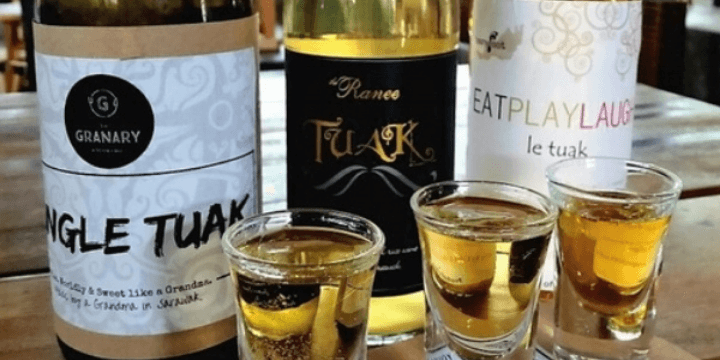
Tuak Trio Platter - The tasting platter features the three varieties of tuak at The Granary. Image source via borneoartcollective.org
TUAK
In a multicultural state of Sarawak, we celebrate each other’s celebration as well as our beverages! Tuak, the most widespread indigenous, locally brewed rice wine. It is the go-to drink, particularly during the Gawai celebrations. Tuak is also used as a sacred offering during traditional rituals and ceremonies. This unique concoction is made out of glutinous rice, local yeast called “ragi”, water and sugar. The mixture is left to ferment in a clay or glass jar for three months. Once the fermentation process is completed, the mixture will develop into pale golden colour. Cloudy tuak is a young tuak fermented for one to two months, whereas clear, pale golden colour is achieved after three months, and it has a drier and complex taste. (Well, we recommend the aged Tuak, the older, the better!)
The flavour differs with every batch, usually sweet and fruity, can be tempting to get you going one after another. Tuak Laki (gentleman’s tuak) is packed with 18% or more alcohol, whereas Tuak Perempuan (ladies’ tuak) is sweeter with less alcohol.
Meet the locals for a shot of tuak to enjoy the full Sarawak experience. With the inventive entrepreneurs in Sarawak, nowadays they have incorporated different fruit-flavoured tuak!
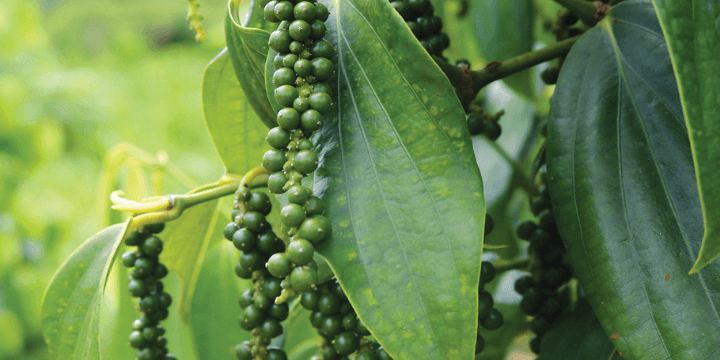
Sarawak Pepper, the king of spices. Image source via commons.wikimedia.or
PEPPER
Sarawak Pepper is the king of spices. Sarawak carries the pride of its best pepper quality internationally with the award of Hallmark of Quality. It has been cultivated since 1856 but more extensively planted in the 1990s. Sarawak pepper accounts for 95% of the total pepper produced in Malaysia. The commercial black peppercorn is the whole dried berry, whereas the white peppercorn is the seed. In terms of spiciness, white pepper has a higher heat level compared to black pepper.
However, black pepper has more complex flavour than white pepper, with a more range of earthy, fruity, and floral notes. Sarawak pepper is commonly crushed or blended to use as a powder for flavouring most local dishes such as laksa, noodles, fried rice, and stir fry vegetables. Pepper is also manufactured into sauces for barbeque and snack dippings. With its exceptional properties of anti-inflammatory and pain-reducing effects, it is converted into home remedy balm to relieve Arthritis, sore and pain.
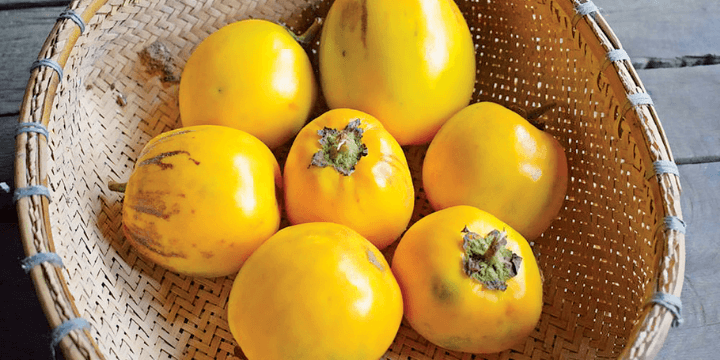
Terung Asam - Borneo sour eggplant which turns yellow when ripe. Image source via borneodictionary.com
TERUNG ASAM
Terung Asam or Terung Dayak is known as Solanum Lasiocarpum Dunal, but locally known as Dayak eggplant. It is a Protected Geographical Indication item in 2011, meaning its reputation and characteristics are tied to the region. Here is a fruit that comes in various fun shapes- small, elongated, and round. The skin ripens from green to a yellow-orange, red-orange or dark purple depending on the species. Terung Asam has a distinct sour and acidic taste, whereas the aroma of the flesh smells like a tomato. In Sarawak, terung asam is usually cooked with soups, curry, vegetables or used as stock for asam fish. Terung asam is being mass-produced and commercialised to help bring profitable income for farmers.
Terung asam Sarawak has been added value and turned into products such as dehydrated asam, juice, jam, Tiung delight, ice cream, crackers, and spicy sambal. Dehydrated terung asam is used to make delicious Gubahan Tiung cakes and cookies served during the festival.
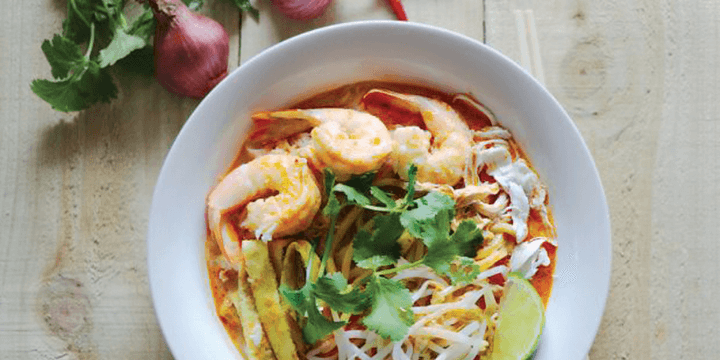
Sarawak Laksa - the breakfast of the Gods Image source via asianinspirations.com.au
SARAWAK LAKSA PASTE
Laksa - your ultimate breakfast choice in Sarawak! You can now experience the taste of Sarawak straight from home. Sarawak laksa has been a staple culinary for locals. A spicy broth made from a culmination of spices and some say has a chicken or prawn stock base that is poured on the bihun (vermicelli noodles). Sarawak Laksa can be found in almost every corner! Want to bring some back? Sarawak has manufactured laksa paste, quick and fast way to fix your cravings! Laksa paste is made out of many types of spices such as lemongrass, galangal bulbs, shallots, dried chillies, cumin seeds, and star anises. The paste is on the shelf in most supermarkets, and you can buy it to cook it at home. If the paste sounds inconvenient, local food manufacturers have come up with an instant version to fix your craving any time, especially on a cold and lazy morning!
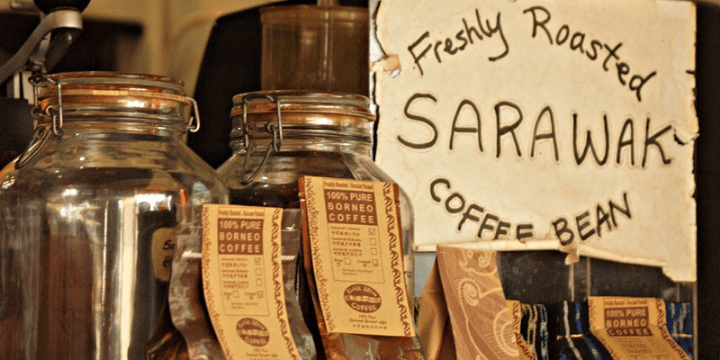
SARAWAK LOCAL COFFEE
Kopitiams or coffee shop has been a lifestyle to the people of Kuching even before the rise of malls. Kopitiam culture in Sarawak begins since the migration of Chinese from Hainan, China. Coffee is the backbone of a bustling kopitiam that accompanies a big bowl of breakfast. These days, Sarawak is considering to grow its coffee as she is recently discovered as a fertile land with a tropical climate and high temperature for Liberica coffee to grow. Native to North and Western Africa, Liberica coffee is rare due to the lack of popularity and cultivation.
With that said, Sarawak’s Liberica coffee will be a unique local product that you will not want to miss. Although coffee production is a relatively young industry in Sarawak, however, Ulu Balam Highlands, which includes Long Lelang, Long Seridan, Bario and Long Bunga are some of the possible locations identified to be a suitable coffee plantation. The coffee beans are manufactured into roasted coffee beans and powder. The aroma of Liberica coffee beans is a blend of bitter, smokey, nutty notes when roasted and brewed. Curious in the commodity or end-product of locally grown Liberica coffee? Black Bean Coffee at Ewe Hai street is ready to serve you a cup of its own freshly brewed Liberica.
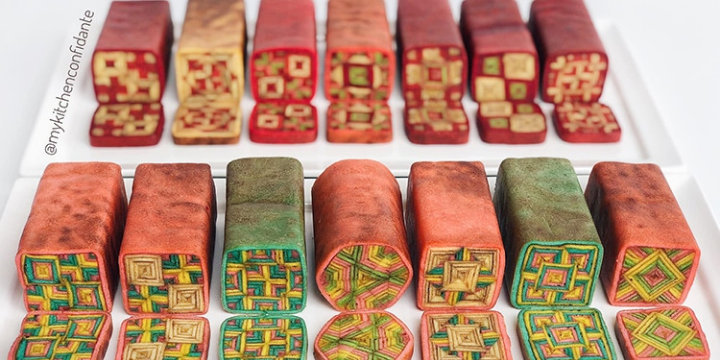
Beautiful Kek Lapis Sarawak Image source via mykitchenconfidante
KEK LAPIS SARAWAK
It may come as a surprise that kek lapis is featured here. Although kek lapis is originally from Indonesia, Sarawak kek lapis is distinguished through its modern touch and taste. Sarawak kek lapis is differently famous because of the multi-layer, colour, flavour, pattern, and names. Each layer has its flavour and colour, and when combined, it’s mouth-watering!
The flavours you can taste are such as Bandung, Horlicks, durian, marble cheese and Masam Manis. The most important characteristic of a good kek lapis is that the cake remains moist. Most kek lapis shops you go into have a sampling tray which allows you to try every single flavour kek lapis before buying. It’s an experience that you must immerse yourself in to understand and enjoy the Sarawak kek lapis’ culture.

The legendary gula apong ice-cream Image source Image source via eatdrinkkl.blogspot.com
GULA APONG
What makes Nipah palm different from other palm trees is that it’s exclusively found in Sarawak. Gula apong is processed from the sap of Nipah palm that typically thrives in Sarawak’s coastal areas. The palm sugar is produced from the sweet, watery sap that drips from cut flower buds of Nipah palm trees. Hence, it is known as a natural sweetener. The golden-brown syrup has a sweet and slightly salty flavour due to the saltwater the Nipah palm grows in, and this gives gula apong its distinctive sweetness. Gula apong is rarely eaten alone, but rather it is incorporated with desserts and drinks such as kuih keria, kuih penyaram, penganan tatuk (rice cake), chendol, and 3-Layer Tea (or Teh C Special) to enhance the dishes’ flavour.
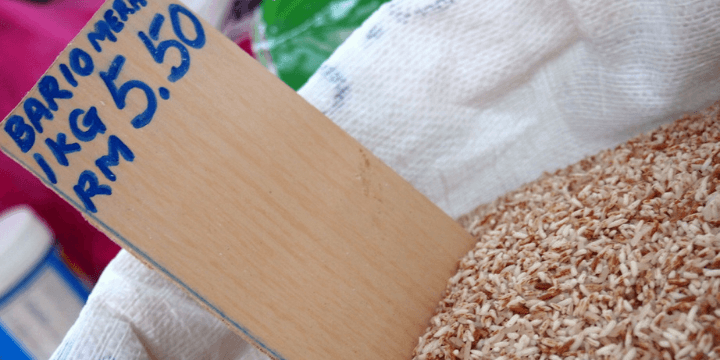
Bario Rice at Sibu Central Image source via lilyrianitravelholic.blogspot.com
BARIO RICE
Bario rice is a Geographical Indication product and known to be one of the finest commodities in Sarawak. It is cultivated by hand and attributed as an organic product because of the absence of pesticides and herbicides. Bario rice planting requires a long process and labours of 6 months yielding once per year. Apart from being organic, it is categorised as a health food as it is high in protein source, thiamine (Vitamin B1) and low in fat as well as moderate in GI rating. Bario rice is medium in size and comes in a variety of colours. When cooked, the rice is exceptionally fragrant and soft in texture. Aside from the conventional way of eating rice, they are made into “Nuba laya”- mashed rice wrapped in ‘isip’ or ‘itip’ leaves. This dish is the heart of Kelabit and Lun Bawang meals. You can find Bario rice on the shelf in supermarkets and local shops that are tightly packed in vacuum packaging.
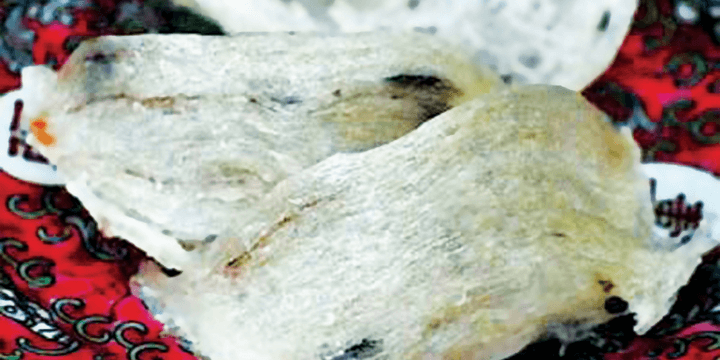
Bird's Nest one of the luxurious health food. Image source via thestar.com.my
BIRD NEST
Bird nest is a luxurious health food, and Sarawak is one of the few places in Southeast Asia that is suitable to breed swiftlets. Traditionally, the consumption of the bird’s nest is a privilege reserved for the highest class of individual in society. In the olden days, it was mainly consumed by the China Emperor. These swiftlets produce bird nests through their saliva. Due to its rarity and exquisite flavour, they are one of the most expensive retail food products.
There are two types of birds nest: the white and black. The whiter the birds’ nest, the purer and tastier it is. (But be careful with the dodgy seller! Some less trustworthy seller is using the chemical to "whiten" the bird's nest).
Bird nest needs to be thoroughly cleaned before consumed. These nests are found in the most inaccessible areas, such as Niah cave. Bird nest has little flavour and is usually accompanied by other dishes, particularly soups and sweet desserts. It contains high nutrients such as protein, calcium, potassium, which traditionally used for digestion, improving the immune system, improves skin complexion and alleviating symptoms of asthma. If you have extra budget, birds nest is your premium souvenir choice that will be loved by your family and friends.

Kolo Mee Image source via magazine.foodpanda.my
INSTANT KOLO MEE
Kolo Mee is Sarawak’s go-to kopitiam cuisine for years! You should not miss this when you’re in Sarawak. Kolo mee comes in varieties include mee pok, handmade mee, bihun, mee sua, and mee kolo. Kolo Mee is uniquely Sarawak as some hawkers hand-produce fresh kolo noodles, then sell it on the same day. These noodles usually come in plain or seasoned with red lard sauce. Good news to those who would want to bring back flavours of Sarawak, there are instant one now! You’ll be surprised that the taste is similar to the one found at kopitiam. Halal and non-Halal instant Kolo Mee are both available in most local supermarkets.
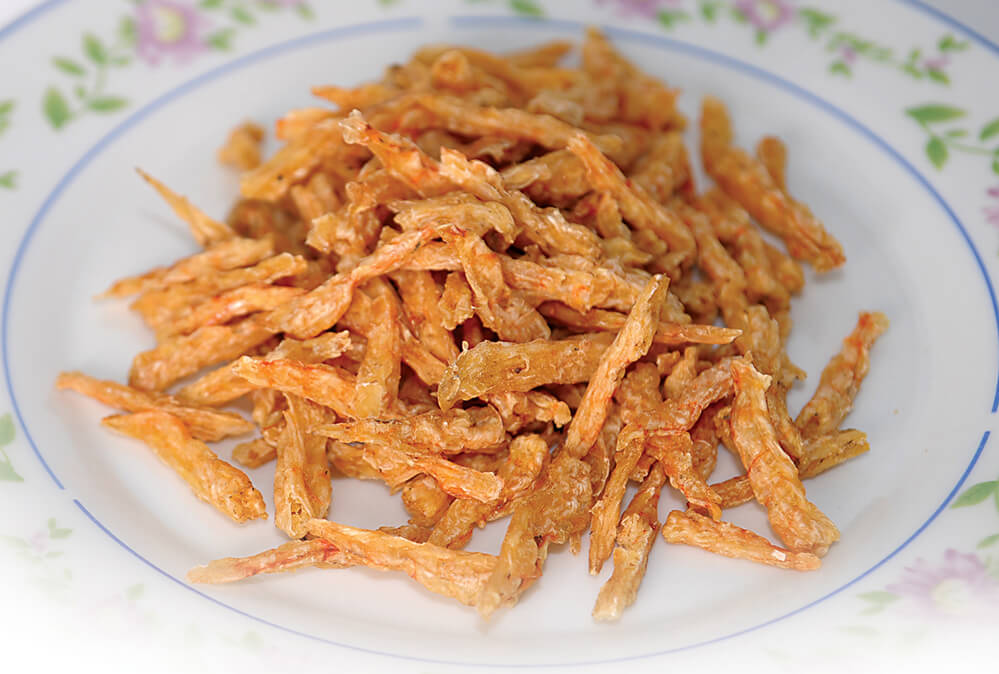
SESAR UNJUR
Sesar unjur (smoked prawn) is a traditional delicacy of the Melanau prepared using a smoking process, which is distinctly different from the popular hae bee (dried shrimps) that is sun-dried. Unique as it sounds, it is believed these flavoursome prawns were produced around four centuries ago.
The process begins with the procurement of fresh prawns that are de-shelled and washed-thoroughly for 3 hours to ensure the flesh is clean. These prawns are then laid on a mat called “kilak” to dry. The final and most intense step is to smoke the prawns under controlled high heat of burning wood for at least 5 hours or more. The type of wood used determines the taste of the prawns. The dried prawns shaped in a thinly, french fries style are then used in cooking to enhance the flavour of a particular dish or eat on its own. Sesar unjur can be found in local markets, usually by kilograms or small packages, which becomes a convenient gift for visitors.
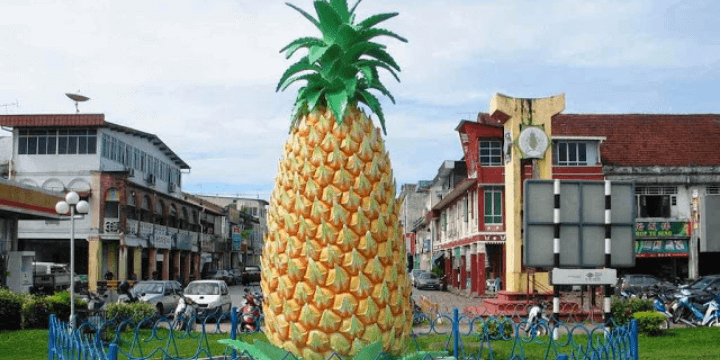
Sarikei Iconic Pineapple
PINEAPPLE
Here in Sarawak, we take pride in one of our juiciest pineapples! Sarikei has been transformed into a destination for agro-tourism due to its large- scale farming of fruit trees, specifically pineapple. Sarikei is so famous for its sweet pineapple that the town is symbolised by a huge pineapple icon! Pineapple Festival is held annually at Sarikei for you to experience and sample the sweet and juicy pineapples. The pineapple comes with a name, “Moris”, locally known as Nanas Sarikei or Nanas Madu. They are manufactured into pineapple juice, cordial, pineapple coffee, and you can even find delicious pineapple chilli sauce made here!
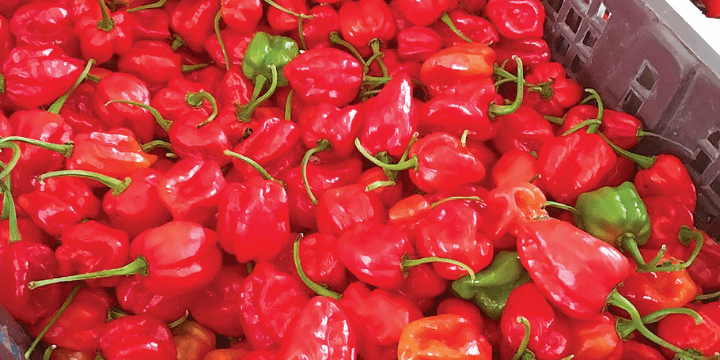
Cili goronong or known as the Image source via Instagram/ Ezzati Farhani
CILI GORONONG
Cili goronong scientifically known as capsicum Chinese habanero group which originates from Amazon, and it is one of the rare species that is recently discovered for cultivation in Sarawak. This chilli has been planted across Malaysia, but Sarawak has the optimal temperature and environment for it to grow abundantly. Cili goronong or Habanero is three to four times spicier than big chilli (chilli besar). Its shape is unique - angular, twisted and crooked, unlike the typical long, slender and sharp tip chillies. The young plant is typically in green colour, and it turns into orange-green or yellow-green when it is half-ripe. When the chilli is fully ripe, it will change its colour into an intense red. The taste is a blend of sweet, smokey, fruity and of course spicy!. This type of chilli is great for grilling. Sarawak agriculture entrepreneurs innovatively turn these spicy bells into cili geronong sauces and dried chilli flakes. Try it and see if it tastes just like Habanero in Mexico!
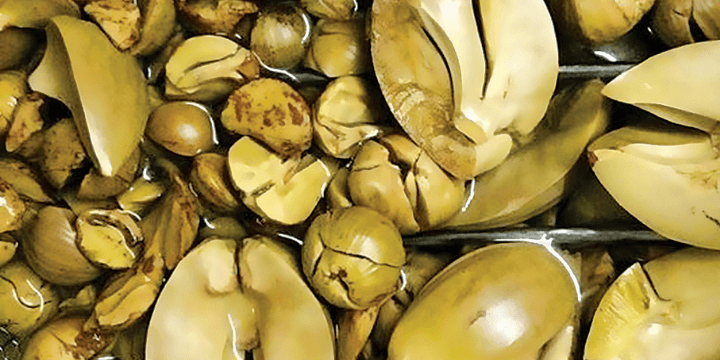
Engkabang - Vegan Butter Image source via Twitter/ Captain Obvious (@reythorical)
ENGKABANG
Have you heard of vegan butter before? Engkabang (Shorea macrophylla) is a fruit tree found only in Sarawak that can be converted into butter, called minyak Engkabang. The oil is extracted from the fruit of Engkabang, dried, pound, squeezed, cooked in bamboo and left hardened.
The butter is a great substitute for cocoa butter. Engkabang butter has an oily texture and taste like vegetable oil. It can be made into chocolate, soaps, candles, cosmetics products and as a source of food. Engkabang is rare to come by as it only bears its fruit every 4 to 5 years along the rivers. If you do come across this special Sarawak vegan butter, you will want to bring home a few slices to enjoy.
By Priscilla Sim