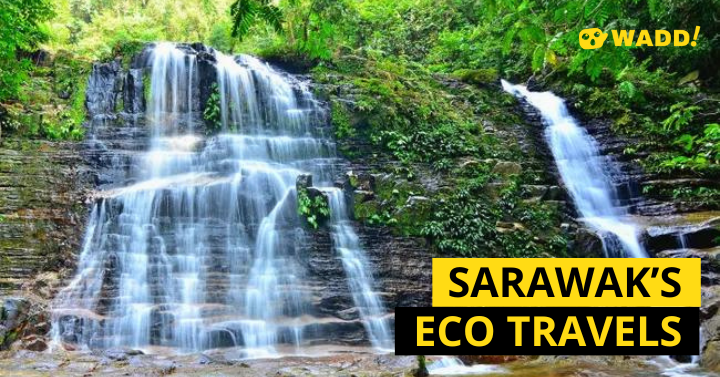
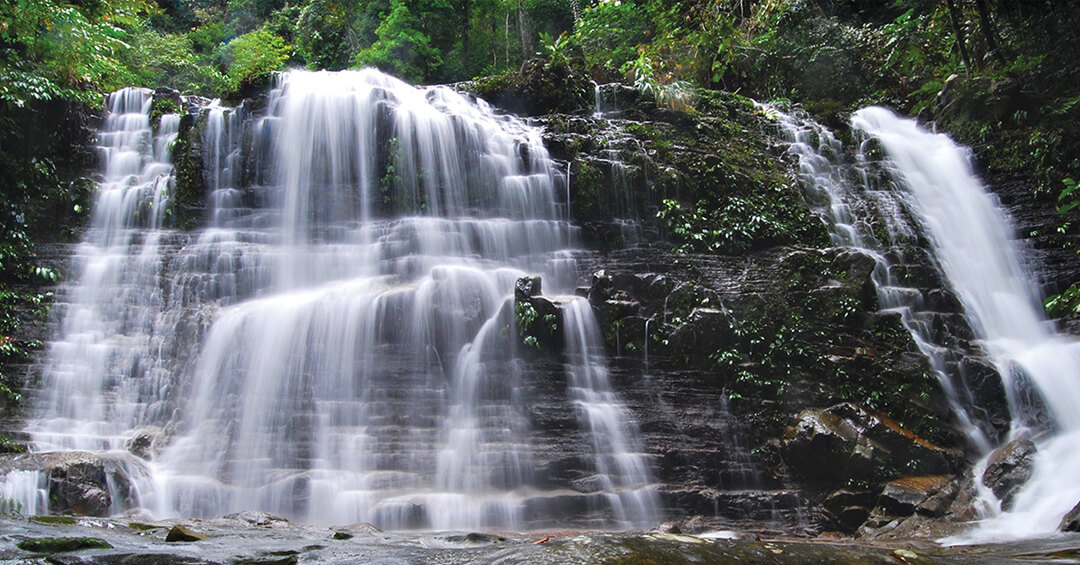
Sarawak is blessed with gorgeous cascading cataracts all over. The best ones are the least known; and because of that, they remain unspoilt, mysterious and loved by the lucky few who have touched their virgin waters. It is time some of these beauties are introduced to readers. Here are four accessible waterfalls around Kuching to start off with.
Cascading Giam
En route to Borneo Highlands Resort, about 40 odd kilometres from Kuching city is an unassuming little Bidayuh village called Kampung Giam. A short distance above the village is Giam waterfall.
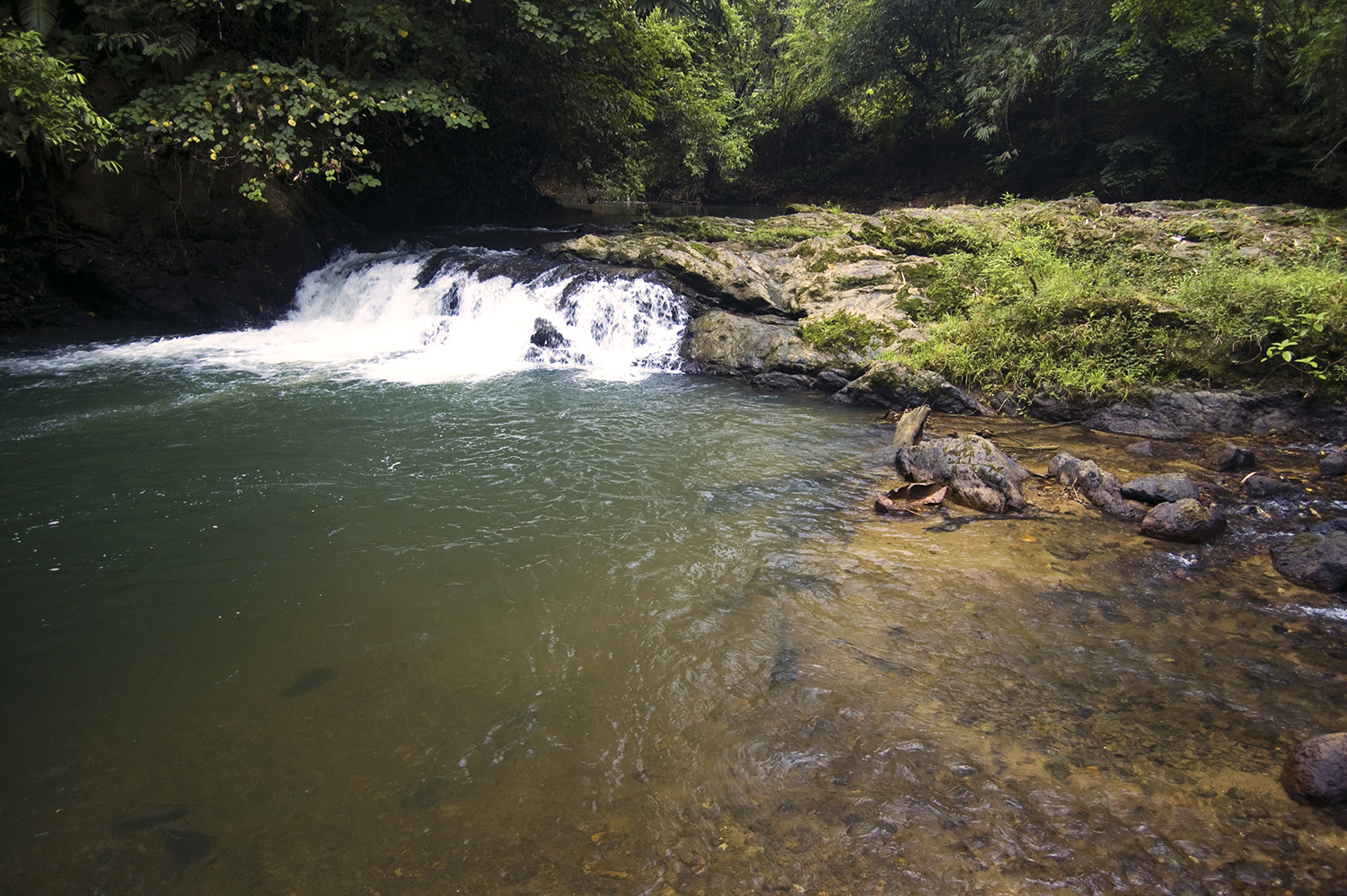
Giam waterfall
The Giam cascades are one of the better-known falls in Kuching, so the villagers are accustomed to strangers rolling up at their front door, usually on weekends. Drive straight up to Kampung Giam via Padawan and the road to Borneo Highlands Resort, and park your vehicle right at the village. It is customary (and good form) to pay a small token sum to the villagers for parking at their doorstep. Ask a friendly villager to point the way to the waterfall.
The shaded picnic and barbeque areas provide a basic spot to spread out the goodies before going for a dip. On a good day, expect to see pretty butterflies and alien-looking bugs sharing the spot with you. Butterflies get a lot of leverage from waterfalls. They suck up much-needed minerals and cool themselves in the shade and humid air.
Giam waters are very cold because it is well-shaded. There is lots of smooth rock around the edges to sit and dangle your feet in the water. Bring a rubber tube or a floating mattress. The force of the cascades ripples out and gives a rhythmic motion which is perfect for a blissful nap on the water.
Trek and Fall at Kubah National Park
At just over 2,200 hectares, Kubah National Park is one of the smaller national parks in Sarawak. It is also one of the most accessible ones at 22km from Kuching city. From numerous points in the city, Mount Serapi forms a charming background, the stuff of local myth and legend; and is also nestled into Kubah National Park. Besides the mountain, Kubah is famous for having one of the highest diversity of palm species in the world - over 90 species per unit area. Scenic Serapi and the lush forest of palms at Kubah get a lot of publicity hoo-ha, mainly because they are obvious and not very far off the beaten track. Hidden amidst tall dipterocarp trees, undulating trails and closer to the heart of Kubah is a series of waterfalls with clear, fast-flowing water from a number of streams - scenic, therapeutic and often underrated. Some get up to a height of 10 metres.
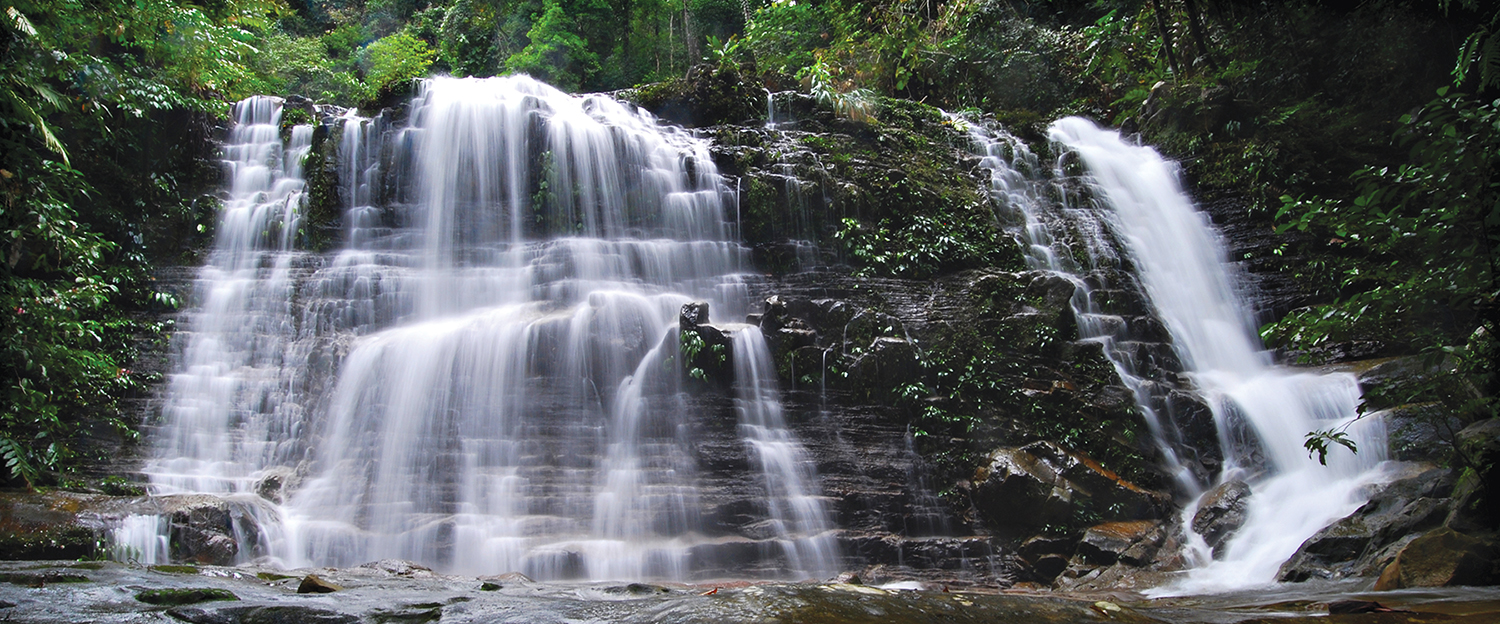
Kubah waterfall
There are a number of ways to get to the main waterfall. For the hardcore trekker looking for a life-reviving dip after a rigorous thrash through primary forest, start at Matang Wildlife Centre and work your way up to some amazing trees so tall you can hardly see the top. About three hours up the slope (depending on your walking speed), the trail splits and a sign points towards the waterfall. Forty-five minutes down the trail, you should be at the waterfall, ready and willing to jump straight in. This is the Rayu Trail. It cuts from Matang Wildlife Centre straight through to Kubah National Park. The entire trail takes about four hours to complete in one direction - not for the faint-hearted.
For the rest of us, we can start at Kubah National Park headquarters, work our way through the palmarium, past very nice forest with Bintangor trees (the same species being used for AIDS research), for about one and a half hours before hitting the waterfall. This walk is not as challenging as walking from Matang Wildlife Centre to Kubah, BUT, it does take a basic level of fitness for it to be done comfortably.
Alternatively, from the headquarters at Kubah, walk 10 minutes up the road towards the summit of Mount Serapi until you reach the sign “Rayu Trail” and “To Waterfall”. This is the 305m (900 feet) rest stop up the mountain. Turn right towards the plank walk. It should take no more than 45 minutes to an hour to reach the waterfall.
The trail system approaching the waterfall, no matter where you start, is a mixture of plank walk and jungle trail passing through mixed dipterocarp forest, swamp and streams. Kubah waterfall is a perfect example of a good workout ending in rewarding nurture by nature.
True to its nature, the rainforest at Kubah is home leeches. They do love taking a suck out of bare skin. The best way to enjoy trekking to the waterfall is with leech socks and jungle trekking footwear. Or, at the very least, leech socks and fully covered shoes.
The management of Kubah National Park and Matang Wildlife Centre is always serious about visitors getting a full experience there. Be sure to check back with the Visitor Information Centre before you plan a trek there.
Jangkar Jivin’
Seventy kilometres from Kuching, between the hamlets of Lundu and Sematan lies the largest waterfall in Southwestern Sarawak. Jangkar falls can be seen when one drives on the main road towards Kampung Jangkar. Cascading down the slopes of Gunung Berumput, Jangkar was once one of Kuching’s best-hidden secrets. Not so these days as more and more adventure and trekking buffs pay homage to it every weekend.
Kampung Jangkar is located west of Lundu, very near to the Indonesian border. It is a gorgeous cataract that gushes down on an almost vertical slope. To get there, one has to trek 45 minutes on an easy trail from the village until the trail ends and the river Jangkar begins. From then onwards, it’s a thrill of splashing and scrambling through water and car-sized boulders for another hour before hitting the falls. On a scale of 1 to 5, 1 being easy peasy and 5 being “I-think-I’m-going-to-die”, getting to Jangkar is probably a level 3 in difficulty.
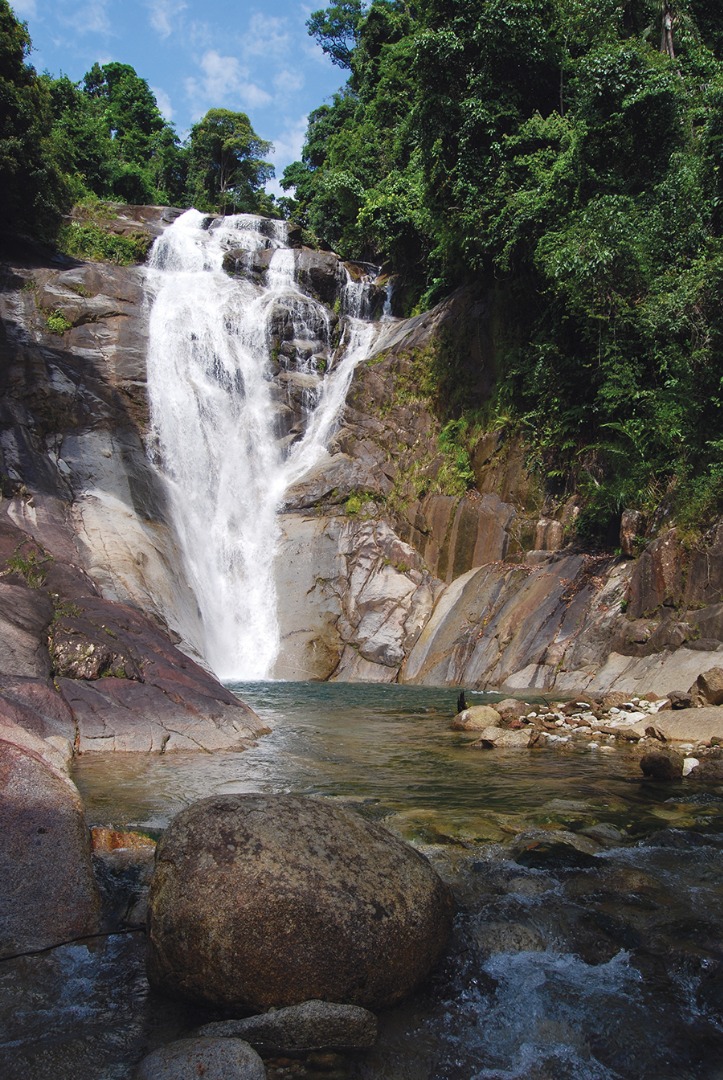
Jangkar falls
En route, the avid explorer will notice a mixture of old trees, wild orchids and some habitat destruction due to logging. Every step is worth it though, for Jangkar is at least six storeys high and spectacular to behold. Climb it, jump into it, swim in it, the roar of the falling water that tapers into calm pools is a perfect demonstration of nature’s power and calm. This is nature at its best.
A word of caution if you are planning to go Jangkar jiving: outfit yourself with proper footwear. Anything with good grip, preferably water-resistant, would be ideal.
A WADD’s Original (previously Happenings in Sarawak article)