
It is the month of August in our Western calendar which also means the 7th month of the lunar calendar - the Hungry Ghost month is just around the corner.
This is a festival observed by many Chinese, particularly those of Buddhists and Taoists religion. In Buddhism, the Hungry Ghost Festival is called the Yulanpen Festival (盂兰盆节) whilst Taoists celebrate it as the Zhongyuan Festival (中元节). There are differences between the Taoists and Buddhists beliefs and practices of the ghost month.
Many would have heard of the festival, but what is the origin of the Hungry Ghost Festival? How is it celebrated? And what are the significances of its practices?
Hungry Ghost Festival in Nutshell
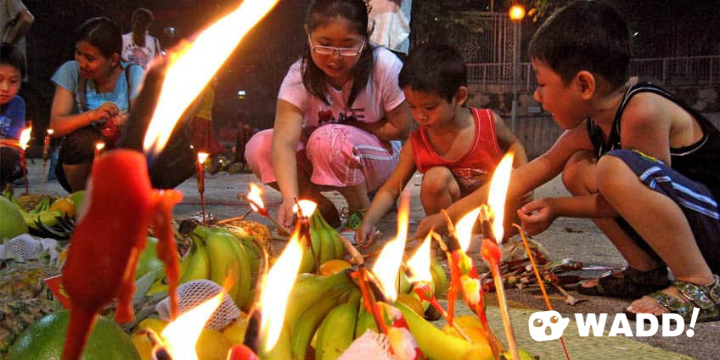
Image source via Richard A. Brooks/AFP/Getty Images
It is believed that the “Gates of Hell” is opened on the first day of the seventh month. Spirits of the dead (wandering souls) would cross over from the underworld to the realm of the living and roam amongst them. To appease the spirits, activities such as burning incense, joss paper and ritualistic food offerings are done as filial piety to dead ancestors, and to avoid the wrath of any ghosts generally. It is also said that better luck will come your way if the spirits are satisfied with your offerings!
Chinese devotees burning joss paper. Image source via iStock
The month-long observance culminates on the 15th day of the seventh lunar month annually. In many parts of Asia, you may notice candles lit around the streets during the month of the Hungry Ghost Festival. They are meant to help guide the spirits back to where they belong before the gates are closed at the end of the seventh month. Many taboos are also associated with ghost month. It is altogether perceived as a bad time to do anything significant such as moving into a new home or having a wedding.
So where did all the customs and traditions of the Hungry Ghost Festival's come from?
The Origin of Hungry Ghost Festival
While Taoists have a different origin tale, the most popular ancient Buddhist legend would be that of "Mu Lian Rescues His Mother" (目连救母).
And so the story goes, Mu Lian, also known as Maudgalyayana, was a top disciple of Shakyamuni Buddha. He was a virtuous monk endowed with supernatural powers, but he had a mother who was not as upright. She was acquisitive and had many transgressions. As karmic retribution, she had to suffer after death to pay for all her wrongdoings. She was condemned to purgatory and had to atone for her sins with excruciating afterlife torture.
 In Chinese hell, souls are taken after death to atone for the sins they committed when they were alive.
Due to her sinful deeds, she did not get the chance to be reincarnated as a human. Instead, Mu Lian's mother was reborn as a hungry ghost. She became a creature with a large body and a narrow throat, doomed to starve for eternity.
Mu Lian learnt that his mother's soul was suffering while meditating. He used his psychic powers to locate his mother in the underworld and tried to relieve her from her sufferings as a hungry ghost. There were many obstacles that Mu Lian encountered in his attempts to rescue his mother. The food he tries to give her would burst into flames before it could enter her mouth.
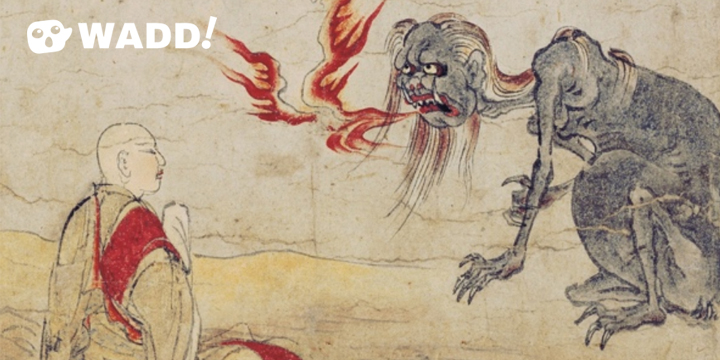
Mu Lian then sought Buddha's help. Touched by his filial piety, Buddha told him that it would require offerings of special prayers and food to save his mother. He was also instructed to offer food to monks and monasteries with Yu Lan Pen (Yulan Bowl) on the 15th day of the seventh lunar month, the day observed as the Hungry Ghost Festival.
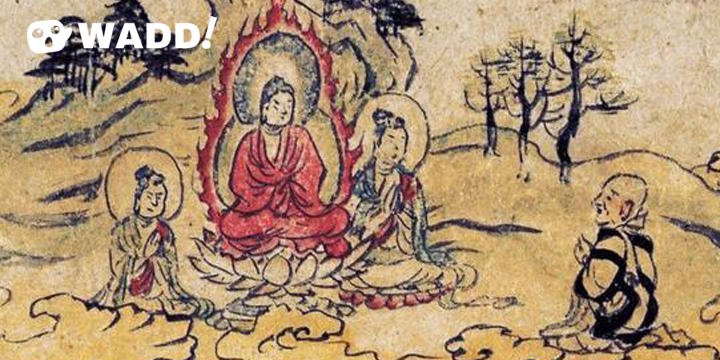
Mu Lian seeking Buddha's help to rescue his mother.
Following Buddha's advice to carry out the ceremony, Mu Lian's mother was finally rescued and freed from the hungry ghost realm. When his mother is reborn once again as a dog, Mulian recites sutra for seven days and seven nights, his mother is reborn as a human again. In the end, she is reborn in the Heaven of the Thirty-three Celestial.
Although the story has developed into many variations, the emphasis lies in the value of filial piety; and the Buddhist customs of making offerings and ancestral worship during the Hungry Ghost Festival.
Hungry Ghost Month Customs and Practices
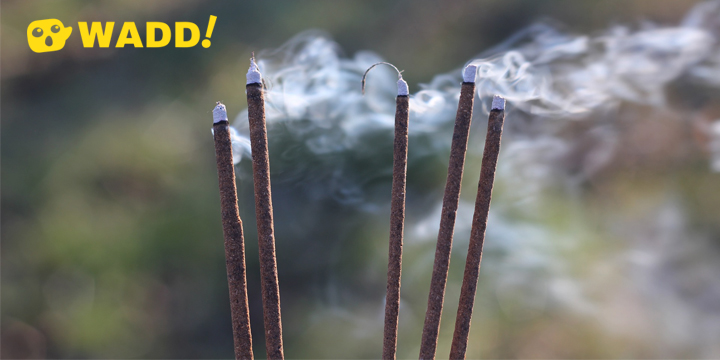
This year's Hungry Ghost Festival falls on August 22nd, where hungry souls from the netherworld come to roam on earth. A time when living descendants will pay homage to deceased ancestors, as well as wandering restless souls by lighting up incense and offering a feast.
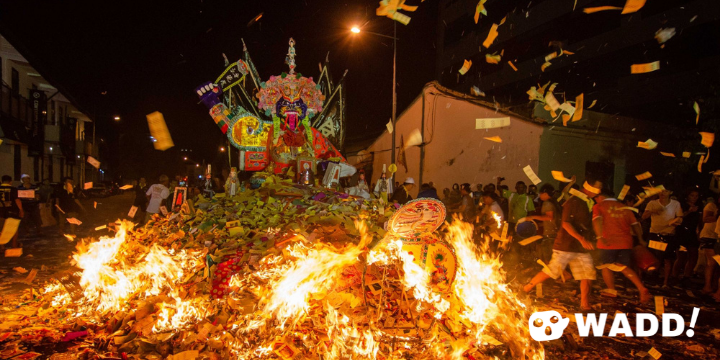
People also burn fancy items of the human world like paper money, gold, cars, and houses to ancestors and family members who have departed. This is so that the deceased can enjoy luxury in the afterlife, and in return, give blessings to the living.
Fun Fact: Did you know that the gold colour joss paper is exclusive for the god and deities while silver joss paper is mainly used during Qingming Festival (Tomb-Sweeping Day), for funerals and the ancestors’ birthdays?
People also pay tribute to lost souls that may not have families to offer them food and joss paper during the Hungry Ghost month in the hope that the spirits will not intrude on their lives or bring misfortune. These lost souls are believed to be those who did not have a proper ritual send-off after they died, and so they continue to wander in the living realm aimlessly.
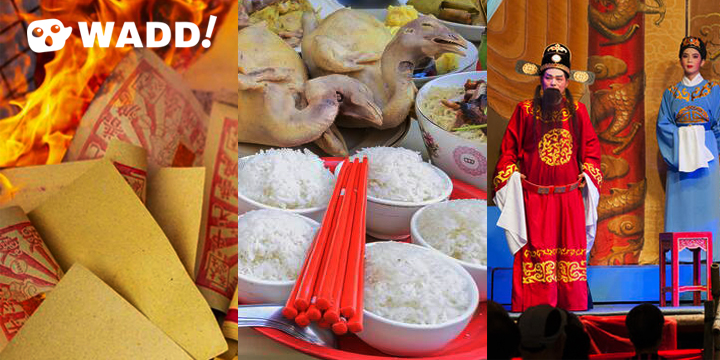
Burning of joss paper, offerings of food and entertainment for the souls at the Hungry Ghost Festival
Hungry Ghost Month Taboos
In the month where the dead are freed to roam for food and fun on earth, the living believes it best to take precautions to avoid bad luck and any chance of encountering evil spirits. Here are some of the taboos that are often linked to the month of the hungry ghost!
- Not to stay out late after dark as the spirits are the strongest at night.
- Avoid wearing red colour clothing that attracts the spirits' attention.
- Refrain from swimming or other water-related activities so as not to get dragged by underwater spirits that have drowned.
- Taking special care to prevent stepping on or accidentally kick any offerings placed on the streets as they may anger the hungry ghosts.
- Big plans such as buying property, house renovation, marriage are discouraged during the month as it is deemed inauspicious.
- Major travel plans by plane or sea, camping trips or trekking are postponed to dodge mishaps caused by mischievous spirits.
- Do not sit in the first row if you come across any getai (song stage) during the hungry ghost festival. The community performances are organised chiefly to keep the spirits entertained and the front seats are left empty, reserved for 'special guests'. So if you happen to be there for free entertainment, just be sure you are not sitting in the first row, else you will be sharing the seats with them!
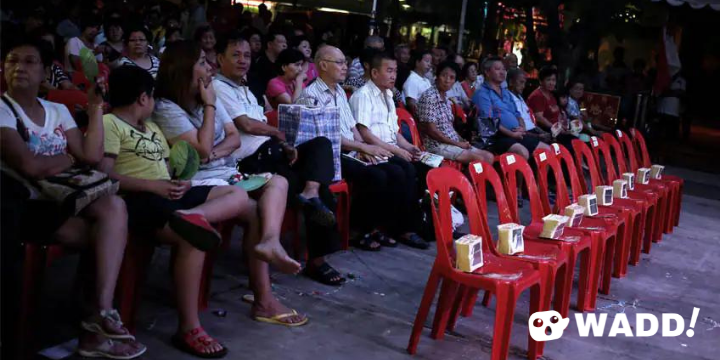
Image source via Wong Maye-E/AP Photo
- Do not kill rare insects such as moths that come into your home. The superstition is that it could be the reincarnation of a spirit or your ancestor paying you a visit!
- If you come across any random unusual objects on the road, such as coins, do not pick them up as they do not belong to you. Some people throw coins on the street as part of the Hungry Ghost Festival ritual.
- If someone taps you on the shoulder or call out your name from behind, especially when you are alone at night, do not look back as you may not like what you see when you turn around. Boo!
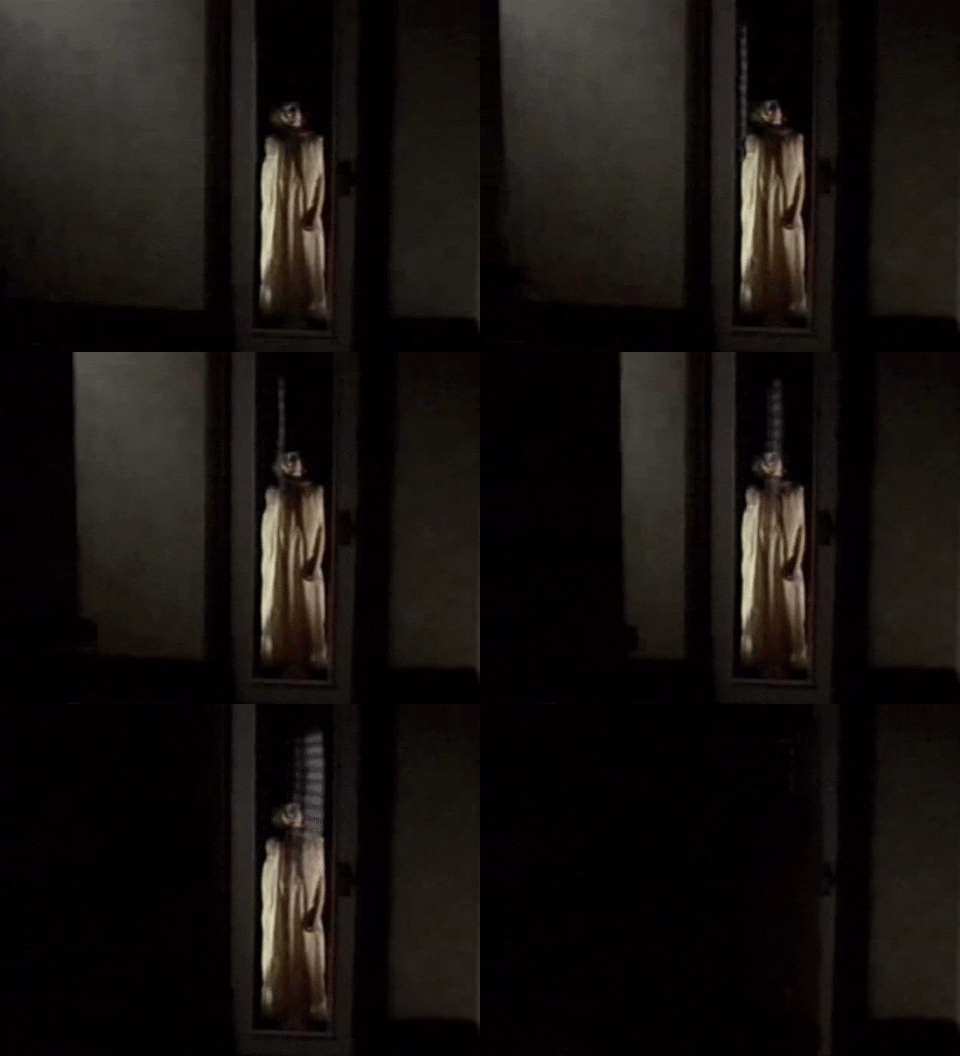
Image source via Giphy
This year, it is most likely another quiet celebration of the Hungry Ghost Festival complying with social distancing that has affected any outdoor mass gatherings amid the Covid-19 pandemic.
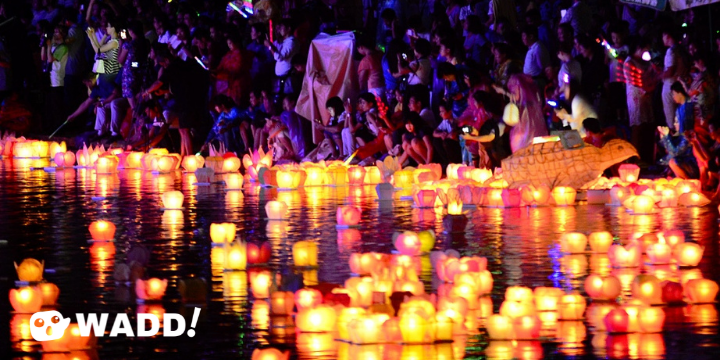
Image source via CGTN
Although the festival used to be celebrated with people gathering in larger groups, there are certainly other ways one can continue to honour the memory of their loved one without risking exposure. Be it a virtual get together or small family gathering, be sure to stay safe!